Loading...
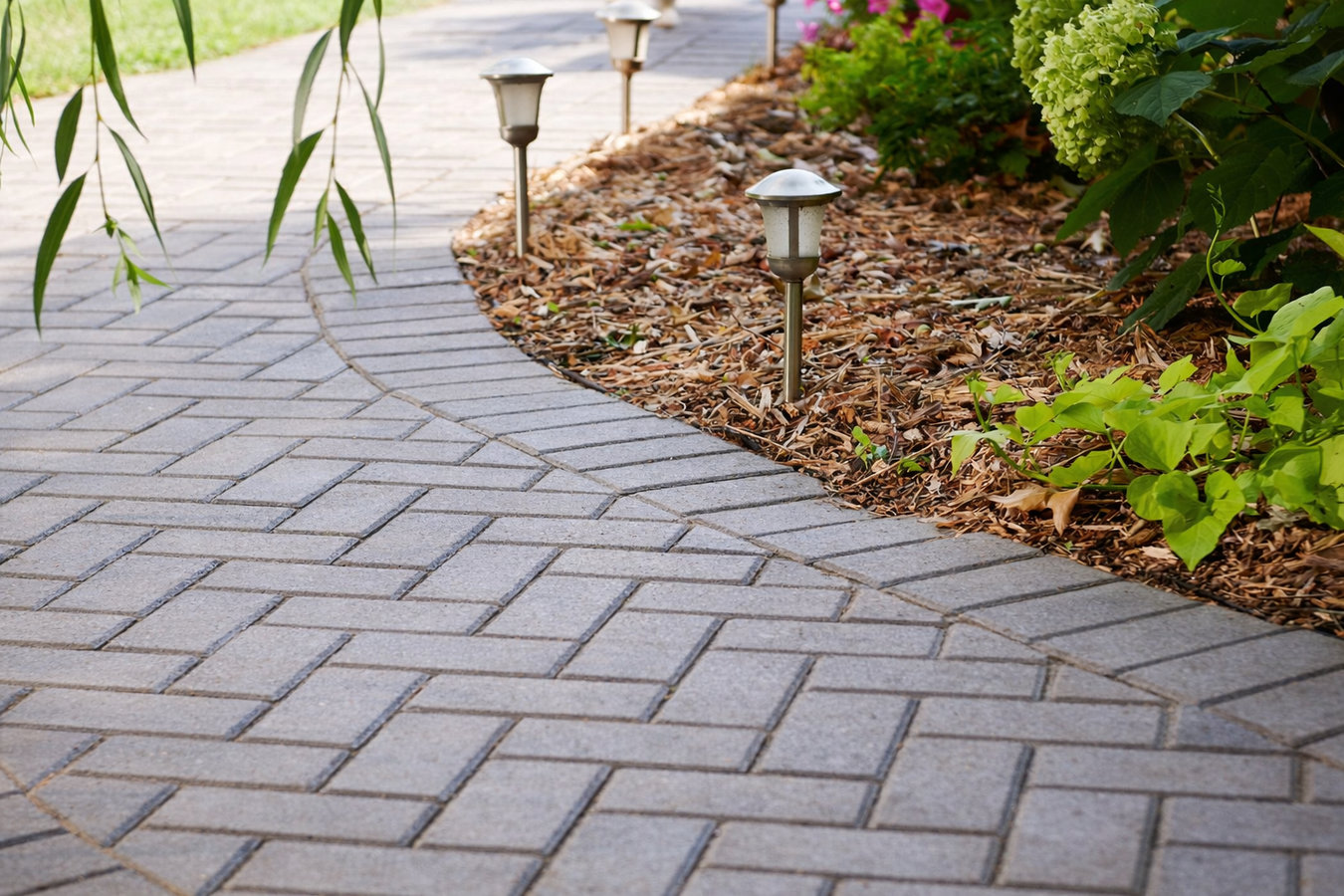
Cracked, sinking, or heaving walkways are a common problem in Greenville's clay soil. We build new walkways with the right base depth so the surface stays solid through wet springs and dry summers.
Walkway construction in Greenville means marking out a path, excavating the soft soil, compacting a stable gravel base, and installing the surface material on top. Most residential jobs run one to two days of active work. The surface material - concrete, brick pavers, or natural stone - is only as good as the base underneath it.
Most Greenville homeowners call us for one of two reasons: an existing walkway that has cracked, sunk, or started to heave from tree roots, or a yard that never had a formal path at all. Either way, the fix is the same - a properly prepared base that accounts for Greenville's clay soil and drainage. Many homeowners who replace a walkway also consider driveway pavers at the same time, since the base work and materials overlap and both projects can often be coordinated in a single visit.
For projects that include outdoor living areas, we also build masonry brick walls that define garden edges, screen yards, or frame the path - a natural pairing with any walkway project.
Small surface cracks can be cosmetic, but cracks that run all the way across a section - especially ones that are widening over time - mean the base underneath has shifted. In Greenville, this often happens because the clay soil expands and contracts through wet and dry seasons. Patching is usually a short-term fix at this stage; a full replacement gives you a stable surface that stops moving.
If one section of your walkway sits noticeably lower than the next, or water pools in a low spot after rain, the base beneath that section has settled unevenly. This is a tripping hazard that gets worse over time. In Greenville's clay-heavy soil, uneven settling is one of the most common reasons homeowners replace walkways that are only 10 to 15 years old.
Large trees near a walkway - common in Greenville's older neighborhoods - can buckle or crack the surface as roots grow underneath. This creates a raised edge that is a genuine tripping hazard. A new installation can account for root proximity in a way that a simple patch cannot, and may include a root barrier or adjusted path alignment.
Many Greenville homes - particularly those built in the 1970s and 1980s - never had a formal walkway installed. If guests regularly step off the path or stepping stones have sunk and wobble, a proper installation solves the problem permanently. A solid, level walkway also reduces mud being tracked inside after rain.
Every walkway we build starts with proper base preparation - excavating to remove the soft clay layer, compacting crushed stone or gravel to a stable depth, and grading for drainage so water runs off the side rather than pooling on the surface. The surface material comes last, and the right choice depends on your budget, the style of your home, and how much maintenance you want to deal with over time.
For homeowners doing a full exterior refresh, our brick wall installation team can add a border wall or garden edge alongside the path. We also coordinate with homeowners who want a new paver driveway at the same time - the materials and base system overlap, and combining both projects into one crew visit is typically more cost-effective than scheduling them separately.
Best for homeowners who want a low-maintenance, cost-effective path that handles Greenville's clay soil with the right base and joint spacing.
Suited to homes in established neighborhoods where a more traditional look is expected - individual pieces can be replaced if one cracks or shifts.
Ideal for homeowners who want a distinctive look - flagstone and similar materials carry a higher cost but pair well with craftsman and traditional home styles.
For existing walkways that are beyond repair - we remove the old surface, correct the base, and install a new path that starts right from the ground up.
Greenville sits on Piedmont red clay, and that soil moves with the seasons - swelling when it absorbs rain and shrinking back during dry stretches. That constant movement is hard on any surface that is not anchored to a deep, stable base. Walkways built without enough base depth or proper compaction start to crack and shift within a few seasons. Greenville also receives around 50 inches of rain per year, which means drainage design is not optional - a walkway that holds water after a storm is a walkway that is failing from underneath. Simpsonville homeowners face the same clay soil conditions, and we build every walkway there with the same base depth and drainage details we use throughout the county.
Greenville's older neighborhoods - Augusta Road, North Main, and similar areas - have another challenge: large, mature trees with root systems that travel well beyond the tree's canopy. A walkway installed without assessing nearby roots may heave and crack within a few years as those roots grow underneath. We check root proximity during every site visit and address it before a single shovel goes in the ground. Homeowners in Taylors deal with the same combination of mature trees and clay soil, and that local experience shapes how we approach every project.
We respond within one business day. Tell us roughly how long the path needs to be, what material you are considering, and whether there is an existing walkway to remove. That gives us enough to schedule a site visit.
We come to your Greenville property, walk the path with you, check soil and drainage conditions, look for nearby tree roots, and take measurements. You receive a written estimate - not a verbal ballpark - before any work is scheduled.
The crew marks out the path, excavates the clay layer, and compacts a gravel base. This base work is where most of the project's durability is determined. Expect one to two days of on-site work for most residential walkways.
Your chosen surface material goes down last. The crew removes all excavated material and debris before leaving. Walk the finished walkway with us before we pack up - that is the right moment to raise any questions.
Free written estimate. We handle permits if needed. Most Greenville walkway projects complete in one to two days.
(864) 800-8158Most walkway failures in the Upstate come back to the same cause: the clay layer was not fully removed and replaced before the surface went down. We excavate to the depth the project needs, pack in compacted gravel, and grade for drainage. That prep work is what separates a walkway that lasts from one that needs replacement in five years. The Interlocking Concrete Pavement Institute sets base preparation standards that guide our process - you can learn more at icpi.org.
One of the most common complaints homeowners have about contractors is a final bill that looks nothing like the original quote. You get a written estimate that spells out exactly what is included - material, labor, removal if applicable - before the crew arrives. The number you agree to is the number you pay.
Greenville has specific permit requirements depending on the scope of the work, and many neighborhoods have HOA design rules on top of that. We check both before a single shovel goes in the ground. You will not get a knock on the door from a code officer or a letter from your association after the job is done.
Every site visit includes a check for nearby trees, drainage patterns, and soil conditions. In Greenville's established neighborhoods, root proximity is one of the most common causes of walkway failure that other contractors miss. We identify the issue at the estimate stage - not after the surface has already cracked.
Every walkway we build carries the same commitment: proper base preparation for Greenville's soil, a written estimate you can hold us to, and a crew that cleans up after itself. Call us or submit an estimate request and we will have someone out to your property within the week.
Brick boundary and garden walls that complement a new walkway and define your outdoor space.
Learn MorePaver driveways that use the same material and base system as a walkway for a unified look.
Learn MoreSpring and summer booking slots fill quickly - reach out now to lock in your project date before the schedule closes.