Loading...
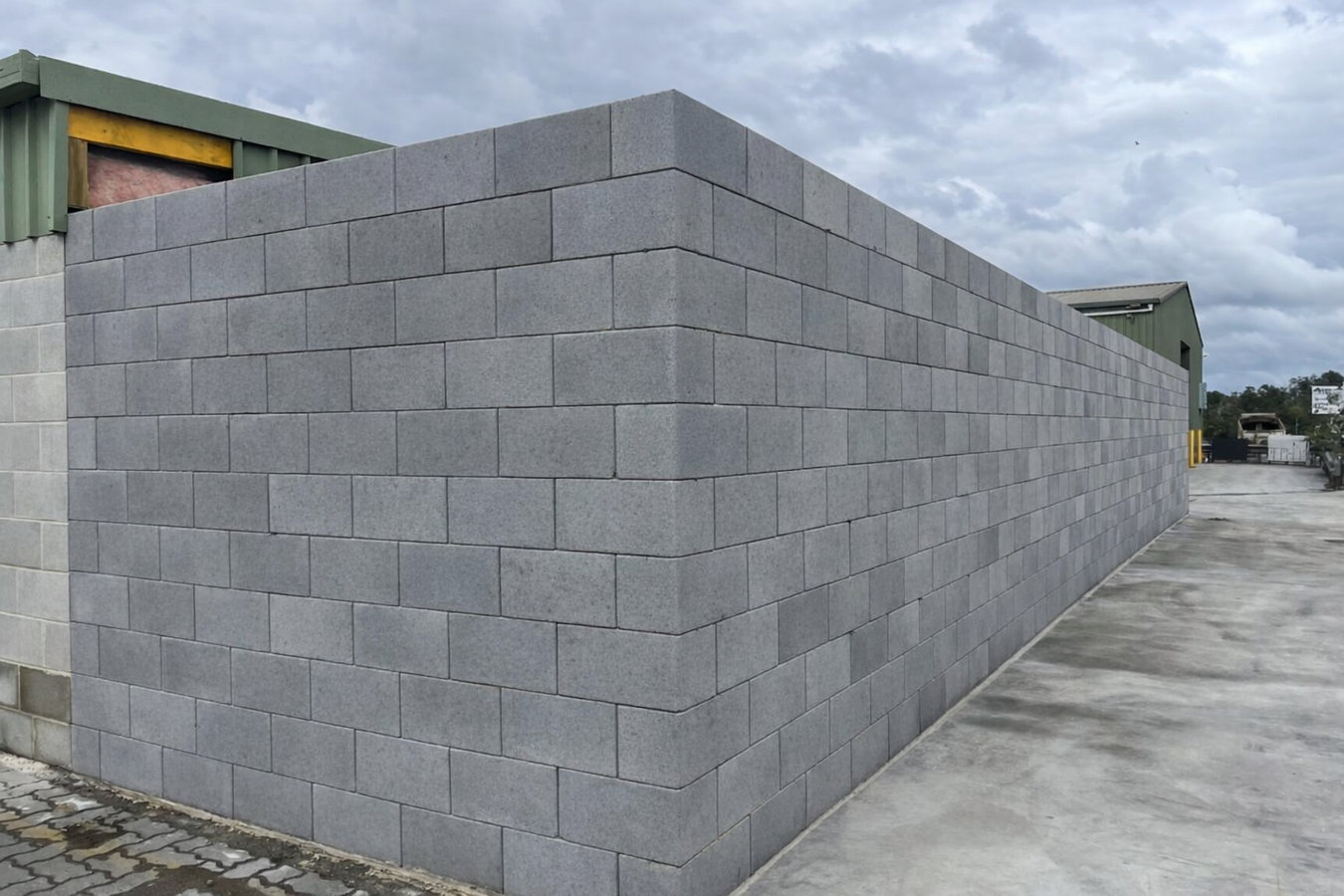
Greenville slopes and red clay soil are a real challenge for any wall. We build concrete block walls on proper footings with drainage that handles the Upstate climate - so your wall holds for decades, not just seasons.
Concrete block walls in Greenville are built by stacking mortar-bonded blocks on a poured concrete footing, creating a wall that resists soil pressure, fire, and Greenville's wet clay conditions. Most straightforward residential walls take one to three days to build once the footing cures - larger or more complex projects run longer.
Greenville homeowners come to us for block wall work for a wide range of reasons - a sloped backyard that washes out every spring, an existing wall that is starting to lean, or a new outdoor living space that needs a solid perimeter. The same basic method works for retaining walls, garden borders, privacy fences, and structural foundations. If the wall will need to carry soil behind it, drainage is not a detail we can skip in Greenville's red clay - it is central to the design. We also work alongside our retaining wall construction process for projects where engineered design or tiered systems are needed.
Before any blocks go down, we dig to stable soil and pour a concrete footing. Skipping or shortcutting that step is the most common reason block walls fail. We ask about it upfront with every job and build it into every written quote.
Greenville averages about 50 inches of rain per year, and red clay sheds water rather than absorbing it. If soil is migrating down a slope after storms, bare patches are forming on a hillside, or mulch keeps washing into the yard below, a retaining wall can stop that erosion before it undermines driveways or damages nearby structures.
If you have an older block or brick wall that is tilting forward, showing large cracks through the blocks, or pulling away from the soil behind it, the wall is under stress. These are not cosmetic issues - a leaning retaining wall can fail suddenly. Getting a mason to look at it sooner is almost always less expensive than waiting until it collapses.
Many Greenville homeowners with hilly lots want a patio, garden bed, or play area but cannot use the ground because it slopes too steeply. A concrete block retaining wall creates a level terrace - turning an unusable hillside into functional outdoor living space. This is one of the most common calls we get from Upstate homeowners.
If the edge of your driveway or a concrete path is sinking or crumbling because the soil beside it has nothing holding it in place, a low block wall or curb can stabilize the edge and stop further damage. This is especially common on properties where the driveway sits higher or lower than the surrounding yard.
Every concrete block wall project starts the same way: we look at your site, assess the slope, check the soil, and figure out exactly how water moves across your yard. That assessment drives every decision that follows - how deep we dig, how much gravel backfill goes behind the wall, whether a drainage pipe is needed, and whether the project requires a permit through the City of Greenville or Greenville County. For retaining walls above a certain height, we coordinate with the appropriate permit office and schedule inspections. We also connect block wall work naturally to foundation block wall installation for projects where the wall is part of a structural system rather than a landscape feature.
We build walls for retaining slopes, creating raised garden beds, defining outdoor spaces, and stabilizing driveways or walkway edges. Each use case has slightly different requirements - a wall holding back a steep hillside needs engineered drainage; a raised garden bed does not. We scope each job to match the actual load the wall will carry, so you are not paying for overkill on a simple project or getting underbuilt work on a complex one.
For homeowners with sloped yards who need to hold back soil, create level terraces, or stop erosion - built with drainage designed for Greenville's red clay.
A durable alternative to timber or plastic edging for homeowners who want a raised vegetable garden or tiered landscape bed that lasts.
For homeowners who want a solid, fire-resistant perimeter around their property or yard that does not need painting or replacing.
Low block walls or curbs that stabilize edges where the driveway or path sits higher or lower than the surrounding grade.
Greenville sits on Piedmont clay - dense, slow-draining soil that expands when wet and shrinks when dry. For any wall that holds back soil, that clay creates real water pressure behind the wall during and after heavy rain. A contractor who does not account for this with proper gravel backfill and drainage pipes is setting the wall up for early failure. The Upstate's rolling topography compounds the issue: many properties have meaningful grade changes that make retaining walls both common and necessary. Homeowners in Easley see this often, where sloped lots near the foothills create erosion and drainage challenges that block walls solve reliably.
Greenville's rapid growth over the past decade has also brought many HOA-governed communities - particularly in corridors like Simpsonville, Mauldin, and Five Forks - where wall height, materials, and appearance may require written HOA approval before construction begins. We ask about HOA status during every estimate visit, and we help you understand what is typically approved in your area before you commit to a design. Permit requirements through the City of Greenville and Greenville County are also part of every project scoping conversation. In Anderson, which we serve regularly, properties often fall under county jurisdiction and we handle those permit relationships directly.
Call us or fill out the contact form and we will get back to you within one business day. We will ask a few quick questions about the slope, approximate wall size, and whether you have HOA restrictions - so the estimate visit is productive from the start.
We visit your property to look at the slope, check soil conditions, and figure out how water moves across your yard. You will get a written quote that spells out the scope, materials, and total cost - no surprise additions when the invoice arrives.
If a permit is required, we pull it on your behalf through the correct Greenville city or county office. Permit processing typically takes one to three weeks. Once the permit is in hand, you will get a confirmed start date.
We dig to stable soil, pour the footing, and let it cure before stacking. For retaining walls, gravel backfill and drainage go in behind the wall as we build up. After the final block is set and the site is cleaned up, an inspector closes out the permit if one was required.
No obligation, no pressure. We respond within one business day and explain everything that affects your quote.
(864) 800-8158In Greenville's red clay soil, a retaining wall without drainage behind it is a wall on borrowed time. We install gravel backfill and drainage on every retaining wall project - it is part of the standard scope, not an add-on you have to ask for. That is what keeps the wall plumb and standing through Upstate spring rains.
The most common reason block walls fail is an inadequate footing. We tell you exactly how deep we plan to dig and what the footing will look like before you sign anything. If your site has surprises - like roots or unstable fill - we discuss them before work starts, not after.
Whether your address falls inside Greenville city limits or in Greenville County determines which permit office applies - and the process differs between them. We know both jurisdictions and pull the permit on your behalf, so the work is on the record and your home is protected at resale.
We build to the guidelines published by the National Concrete Masonry Association, the leading technical body for concrete block construction. That means the wall proportions, drainage specs, and mortar mix are based on proven standards, not guesswork.
We work in Greenville and the Upstate every week, which means we understand the soil, the slope patterns, the permit offices, and the HOA dynamics that affect block wall projects here - the same local grounding any experienced retaining wall contractor working this market needs to get projects right. That local knowledge is built into every estimate we write.
Block wall construction specifically designed for foundation systems - where structural load, waterproofing, and code compliance requirements are more demanding.
Learn MoreEngineered retaining wall systems for steep slopes, tiered yards, and sites where a standard block wall approach needs a more comprehensive design.
Learn MoreSpring is the busiest season for block wall work in the Upstate - reach out now for a free written estimate before the schedule fills.