Loading...
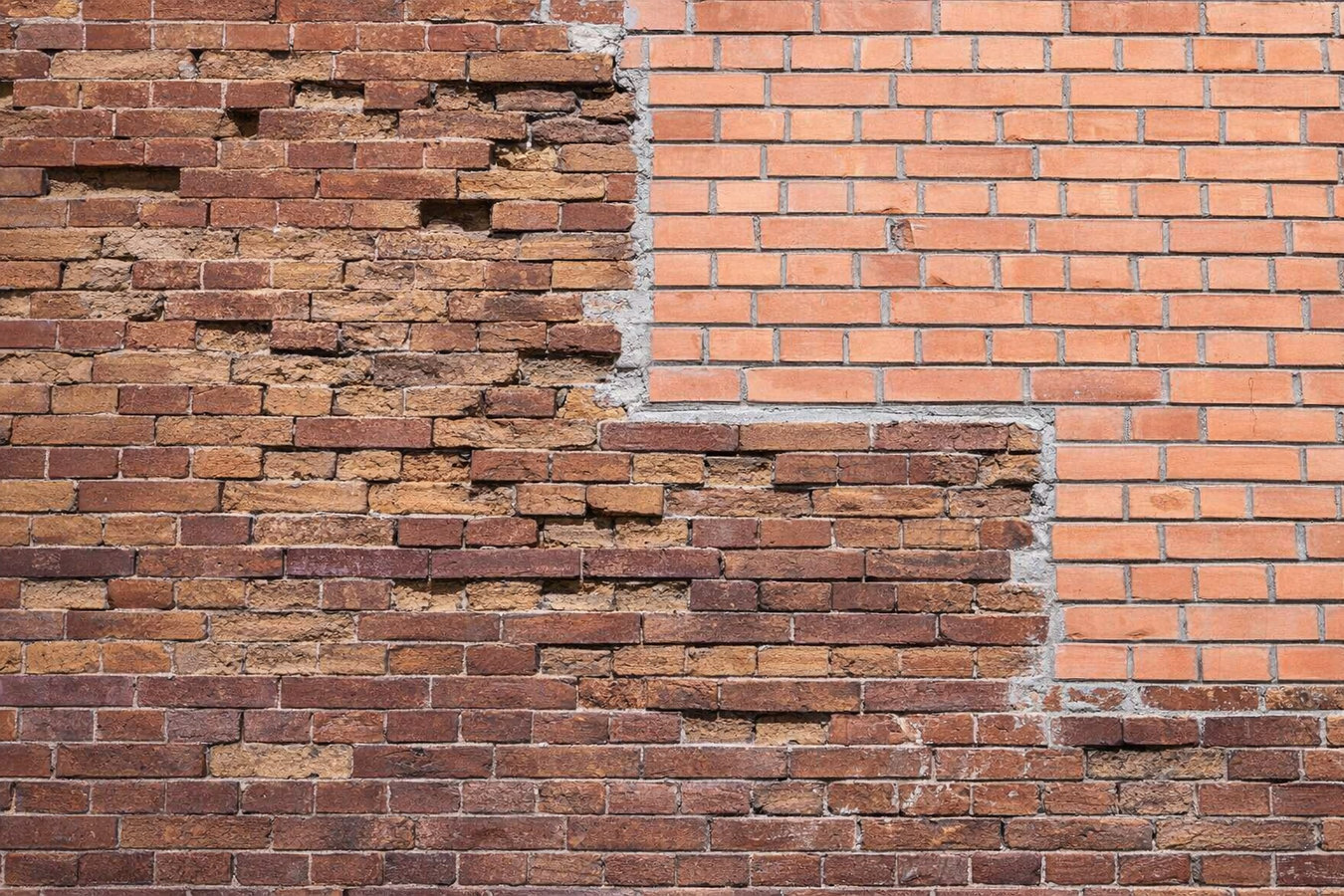
Crumbling mortar, stained brick, and spalling stone do not have to mean a full rebuild. We repair and renew your masonry so your home stays dry, solid, and looking its best.
Masonry restoration in Greenville, SC covers repairing and renewing deteriorated brick, stone, or concrete block surfaces damaged by age, weather, or water intrusion, and most targeted residential repairs are completed in one to three days without disrupting your household.
Masonry restoration is not one single job - it is the umbrella covering everything from replacing crumbled mortar joints to cleaning stained brick faces to stabilizing walls that have started to lean or separate. If you own a brick home in Greenville, especially one built between the 1940s and 1970s, the mortar holding those bricks together has a lifespan. Greenville's climate - roughly 50 inches of rain per year combined with winter freeze-thaw cycles - accelerates that wear. When mortar fails, water moves in behind the brick, and the damage grows quickly from there. Many homeowners start with a masonry inspection and discover that what looked like a cosmetic issue is actually tied to a deeper concern that also benefits from fireplace installation or chimney work alongside the main repair.
Caught early, masonry restoration is one of the most cost-effective investments you can make in a brick home. The work stops active water entry, extends the life of your masonry by decades, and keeps the character of the home intact.
Walk up close to your brick walls or chimney and look at the lines between the bricks. If the mortar looks sandy, cracked, or sits more than a quarter inch below the brick face, it is no longer keeping water out. In Greenville's wet climate, open mortar joints are an open door for water to get inside the wall.
That chalky white residue - called efflorescence - means water is moving through your masonry and depositing minerals on the surface. It is especially common on Greenville homes with heavy shade from the city's mature trees. On its own it is not structurally dangerous, but it is a reliable sign that moisture is getting in somewhere and the source needs to be found.
Cracks that zigzag along the mortar lines rather than cutting straight through the brick often mean the wall or foundation has shifted. In Greenville, the expansive red clay soil is a frequent cause of this movement. A small stair-step crack may be cosmetic, but a wide or growing one warrants a professional look before it becomes a structural problem.
If you notice chunks or flakes of brick on the ground near your home, water has gotten into the brick, frozen, and forced the surface layer off. Once a brick starts spalling it absorbs water even faster, so the damage accelerates. Catching it early means replacing a handful of bricks rather than a whole section.
Our masonry restoration work covers the full range of brick and stone repair. For mortar joints we grind out deteriorated material to the correct depth, match the mortar mix to your home's original construction, pack the joints by hand, and tool the surface to restore the original profile. For homes in Greenville's mid-century neighborhoods, this mortar matching step is critical - using a mix that is too hard for older, softer brick shifts the stress and causes brick cracking over time. If joints have failed severely enough that bricks have cracked or started to spall, we address that as well. We also handle stone masonry restoration for homes and structures where stone veneers or natural stone walls have developed gaps, cracks, or staining that needs professional correction.
For chimneys, restoration often means addressing the crown, the flashing at the roofline, and the mortar joints on all four exposed sides - not just the face you can see from the driveway. Every scope is assessed in person and priced in writing before any work begins, so you know exactly what you are agreeing to.
Best for brick homes where joints have worn down and are allowing water behind the wall.
Suited to walls where individual bricks have spalled, cracked, or come loose and need swapping out.
Ideal for homeowners who need crown repair, joint repointing, and flashing correction on an aging chimney.
Right for stone veneer, natural stone walls, and block structures showing cracks, gaps, or deteriorated mortar.
Greenville sits in the Upstate region of South Carolina and receives around 50 inches of rain per year - well above the national average. That steady moisture, combined with warm summers and occasional winter freezes, puts masonry through repeated wet-dry and freeze-thaw cycles that break down mortar faster than in drier climates. Greenville's established neighborhoods - Augusta Road, North Main, and the Overbrook area - are filled with brick ranch and colonial homes built between the 1940s and 1970s. Brick from that era is often softer and more porous than modern brick, which means it absorbs more water and is more vulnerable if the wrong mortar mix is used during repairs. Homeowners in Taylors and Greer face the same conditions - the same clay soils, the same rainfall, and many of the same mid-century brick homes.
Greenville's mature tree canopy - one of the city's most loved features - also creates masonry challenges. Shaded brick surfaces stay damp longer, which accelerates moss, algae, and efflorescence growth. North-facing walls and surfaces under heavy tree cover are the first to show visible deterioration. The red clay soils common throughout the Greenville area expand when wet and shrink when dry, and that seasonal movement can open stair-step cracks in mortar joints or push corners out of alignment. Understanding these local factors is what separates a contractor who knows Greenville from one who treats every brick wall the same.
Reach out by phone or through our contact form and we respond within one business day. We will ask where the damage is and how old the home is - details that help us show up prepared to assess correctly.
We walk the exterior in person, check mortar depth, look at brick condition, and identify any related drainage or structural concerns. Within a few days you receive a written estimate with a clear breakdown - no phone quotes for masonry work, because the scope can change once someone actually looks at the wall.
The crew removes damaged mortar to the correct depth using grinders and chisels - this is the noisiest part of the job. Fresh mortar is then mixed to match your home's original formulation, packed by hand, and tooled to restore the original joint profile. If bricks need replacing, we work to find a close color and texture match.
At the end of each workday the crew sweeps up mortar debris and leaves the area tidy. When the job is done, walk the finished work with the contractor before signing off. Fresh mortar needs 24 to 48 hours before it can get wet, and up to 28 days to reach full strength.
We walk the property with you, explain what we find in plain terms, and give you a written quote before any work begins. No obligation.
(864) 800-8158Using the wrong mortar mix on an older Greenville home shifts the stress onto the bricks and causes cracking within a few years. We assess the existing mortar and match the new mix in strength and flexibility. This is especially important for homes in Augusta Road and North Main built before the 1960s.
You receive a detailed written breakdown of what needs to be done and what it will cost before anyone picks up a tool. We do not change that number without talking to you first. You should never feel like you are guessing about what you are paying for.
South Carolina requires contractors doing work above a set dollar threshold to hold a state license through the SC Contractors' Licensing Board. You can verify any contractor's status at{' '} llr.sc.gov before you hire. We hold and maintain our license so you have legal recourse if anything falls short.
Masonry work creates dust and debris. We sweep the area and remove loose material at the end of each day so your yard and driveway are not a construction zone for the duration of the project. When the job is complete we haul away every scrap.
Good masonry restoration protects your investment and keeps the character of your home intact. We bring local knowledge of Greenville's housing stock, honest assessments, and work that is built to last the next 20 to 30 years. The Brick Industry Association publishes the most widely used technical guidance on brick repair and restoration - a contractor familiar with those standards understands how to match mortar to older brick.
Add or rebuild a masonry fireplace while your restoration crew is already on-site.
Learn MoreNatural stone walls and features that require the same matching and repair expertise as brick restoration.
Learn MoreGreenville's rainy season does not wait - the sooner failing mortar is addressed, the less it costs to fix. Reach out now and get a written estimate within a few days.