Loading...
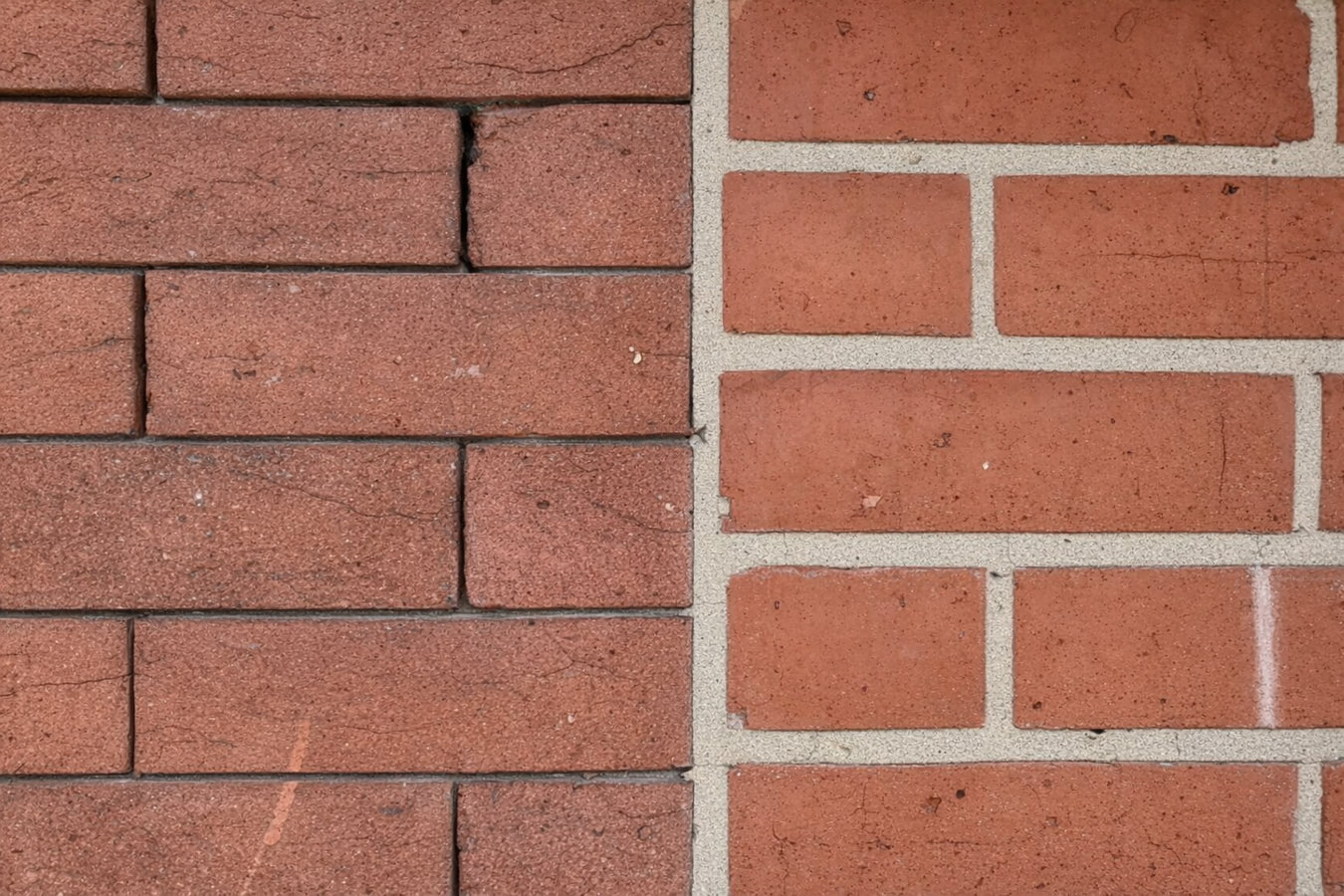
Crumbling mortar joints leave your brick walls open to Greenville's rain and freeze-thaw winters - we remove the old mortar and pack in a properly matched replacement that seals your wall for decades.
Brick pointing in Greenville, SC means removing old, crumbling mortar from between your bricks and replacing it with fresh mortar - most jobs on a single wall or chimney are completed in one to two days.
Mortar is softer than brick by design. It absorbs the small movements and moisture that would otherwise crack the bricks themselves. Over 20 to 30 years it gradually weathers, shrinks, and pulls away from the brick face - and once those gaps open up, Greenville's 50-plus inches of annual rainfall has a direct path into your wall. The good news is that catching mortar failure before it reaches the bricks keeps this a straightforward repair rather than a larger project.
Brick pointing is closely related to foundation repair - when mortar on a foundation wall fails, water intrusion can lead to structural issues that are far more involved to address. If you are seeing crumbling joints anywhere on your home, it is worth having the whole exterior assessed at the same time.
Run your finger along the mortar lines on your brick wall or chimney. If the mortar feels soft, crumbles easily, or you can push your finger more than a quarter-inch into a joint, it is time to call. Healthy mortar should feel firm and solid - it should not give way under light pressure.
That chalky white residue on brick is called efflorescence - mineral salts left behind when water moves through the wall and evaporates at the surface. In Greenville's wet climate, this is a reliable early warning that moisture is getting into your mortar joints. It does not always mean severe damage yet, but it does mean water is finding a way in.
Many of Greenville's older brick homes in neighborhoods like North Main, Overbrook, and Augusta Road were built with mortar that has reached the end of its natural life. If you have owned the home for more than ten years and have never had a mason look at the joints, there is a real chance some sections are due.
If you see water stains on an interior wall that backs up to an exterior brick surface - especially after heavy rain - failing mortar joints are one of the first things to rule out. Greenville gets significant rainfall, and open joints on a wet exterior wall can let moisture migrate inward over time.
Our brick pointing work starts by grinding or chiseling out the damaged mortar to a consistent depth - roughly three-quarters of an inch - so the new mortar has a clean surface to bond to. We then mix mortar matched to your existing joints in hardness, texture, and color, and pack it carefully into each joint before tooling (shaping) the surface so it sheds water the way the original profile was designed to. This is not a fast job done right, but a crew of two can cover a full wall in one to two days depending on how much damage there is.
For older Greenville homes - particularly those built before 1960 - mortar matching is not just cosmetic. Older brick was set with softer lime-based mortar, and using a harder modern mix on those walls forces the bricks themselves to absorb movement, which leads to cracking. We test a small section first and select the mortar hardness to fit your brick. We also handle masonry restoration for walls where the damage has gone beyond the joints to the brick face itself, and our team is experienced with chimney repointing - the section of a home where mortar takes the hardest weather abuse year-round.
Best for homeowners with brick walls showing surface mortar wear, gaps, or early moisture signs before water damage reaches the bricks.
Best for homeowners with chimneys showing receded or crumbling joints near the roofline, where mortar takes the most rain and freeze-thaw punishment.
Best for pre-1960s brick homes where lime-based original mortar must be matched in hardness and flexibility to prevent cracking the bricks themselves.
Best for homeowners where mortar failure on a foundation wall is creating a path for water intrusion into the crawl space or basement.
Greenville sits in the Upstate region where winters regularly bring overnight freezes followed by above-freezing daytimes. That back-and-forth - water seeping into a small mortar crack, freezing, expanding, then thawing - is one of the main mechanical forces that widens mortar joints over time. It is not as severe as Midwest winters, but it is consistent enough that older brick homes in Greenville's established neighborhoods show real mortar wear, especially on north-facing walls that stay damp longer.
Add in Greenville's annual rainfall of around 50 inches and summer humidity that keeps brick walls damp for extended periods after rain, and you have conditions where a small mortar gap can become a significant moisture problem faster than it would in a drier climate. Homeowners across Greer and Fountain Inn with brick homes built in the 1950s through the 1980s are frequently at or past the point where repointing is overdue. The cost-effective window is before the water damage reaches the bricks themselves - at that point the repair scope and price increase considerably.
Tell us where the problem is, roughly how old the home is, and whether you have noticed any water damage inside. We respond within one business day and schedule a time to come out and look at the wall in person.
We walk the perimeter and inspect the mortar joints closely, paying attention to chimneys, north-facing walls, and areas near gutters. The assessment takes 20 to 45 minutes and is followed by a written estimate - ask whether it covers all affected sections, not just the most visible ones.
The crew grinds or chisels out the old mortar, mixes a matched replacement, and packs and tools each joint. You will hear grinding and there will be dust and debris near the wall base - a good crew covers the area with drop cloths and cleans up before leaving each day.
We walk you through the finished sections before leaving. Fresh mortar needs to stay dry for 24 to 48 hours - hold off on sprinklers and avoid power-washing the wall. The mortar lightens slightly as it cures over the following weeks. If anything looks off after a week, call us.
We walk the wall with you, explain exactly what needs work, and give you a written price before any work starts. No obligation, no pressure.
(864) 800-8158Using the wrong mortar mix on an older brick home causes bricks - not mortar - to crack over time, turning a modest repair into a major one. We test a section first and select mortar hardness and flexibility to match what your home was originally built with, whether that is a 1940s Augusta Road bungalow or a 1980s neighborhood brick rancher.
Brick pointing is one of the jobs where timing matters. We schedule repointing work in spring and fall when Greenville temperatures support proper mortar curing, and we do not push work into summer heat or hard-freeze windows where fresh mortar is at risk of cracking before it bonds.
If your home is in or near a Greenville historic district - such as parts of the West End or downtown - mortar repairs may be subject to review guidelines. We are familiar with those requirements and can help you understand whether your project needs additional review before work starts. See the Greenville Historic Preservation Commission for more detail.
We give you a written estimate that covers all affected sections - not just the most obvious ones - and that price holds. If we find additional areas during the inspection that were not visible from the ground, we flag them before the estimate is finalized, not after work has started. You decide what to include.
Mortar matching, seasonal scheduling, and transparent pricing are the three things homeowners in Greenville consistently tell us they wish they had known to ask about before hiring their last contractor. We try to make those things easy to verify upfront. Call us or request an estimate and we will get back to you within one business day.
When mortar failure on foundation walls leads to water intrusion or structural movement, foundation repair addresses the root problem.
Learn MoreFor walls where damage has gone beyond the joints to the brick face itself - spalling, staining, or structural cracks that need more than repointing.
Learn MoreSpring booking slots fill fast - reach out now to lock in your date before the summer heat makes scheduling harder and mortar curing less reliable.